Booster Pump Installation
Local booster pump installation for Texas with a written scope, clear pricing, and scheduling you can plan around.
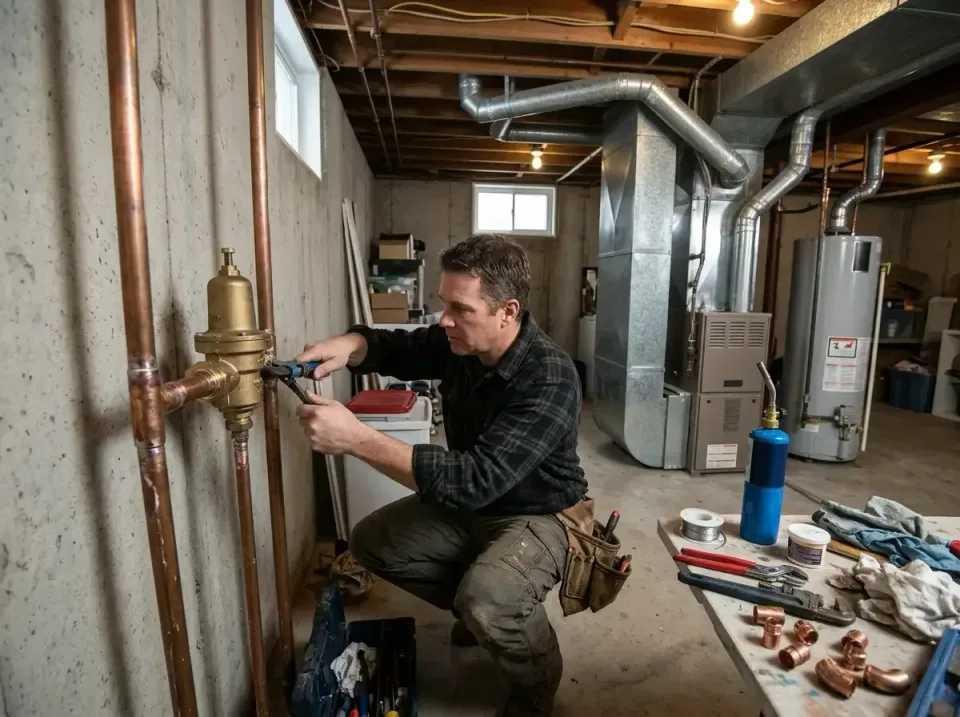
When hot water pressure suddenly falls, the cause may be a pressure switch that is no longer signaling a well pump correctly or a regulator restricting incoming water. A pressure regulator controls water entering the home, so a fault can affect several fixtures at once. Texas Plumbing Pros handles low water pressure repair in Texas by checking the system before recommending parts, including when a home needs a pressure switch adjustment or regulator repair.
Certified professionals across Texas covering your full service needs.
Local booster pump installation for Texas with a written scope, clear pricing, and scheduling you can plan around.
Water Pressure Regulator Repair in Texas — what the job involves, what affects the price, and how scheduling works, explained before you book.
Local sudden pressure loss repair for Texas with a written scope, clear pricing, and scheduling you can plan around.
Local low hot water pressure repair for Texas with a written scope, clear pricing, and scheduling you can plan around.
Local shower pressure repair for Texas with a written scope, clear pricing, and scheduling you can plan around.
Local faucet pressure repair for Texas with a written scope, clear pricing, and scheduling you can plan around.
Clogged Water Line Repair in Texas — what the job involves, what affects the price, and how scheduling works, explained before you book.
Local main water line leak repair for Texas with a written scope, clear pricing, and scheduling you can plan around.
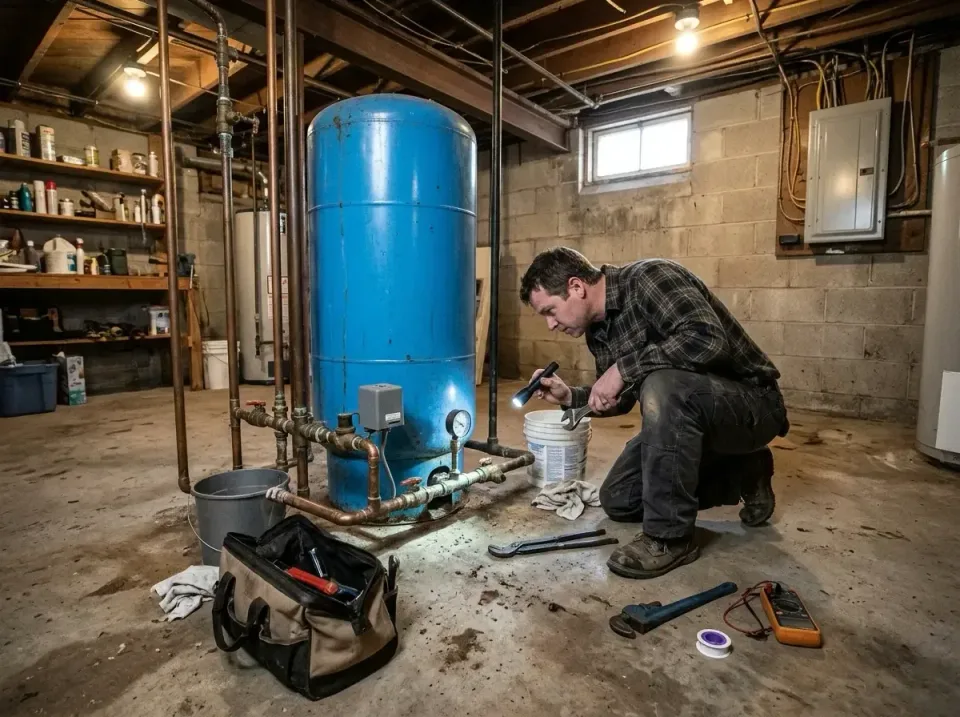
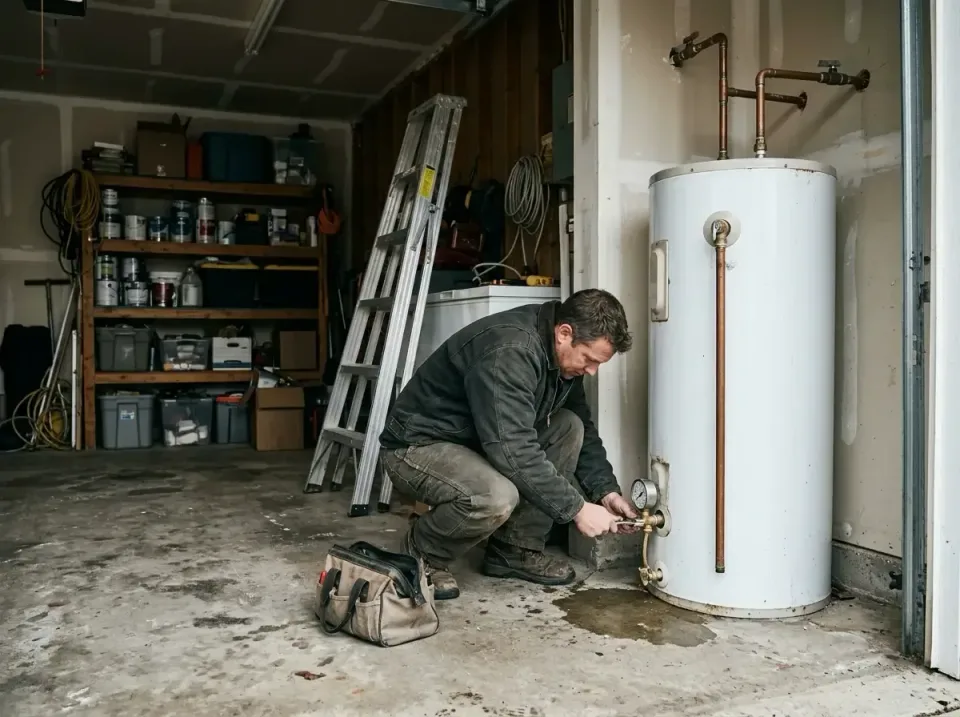
From homes near the Alamo to properties across Texas, our crew traces weak water service to its source before recommending a repair. Low Water Pressure Repair may involve a supply restriction, a worn component, or a localized fixture issue; we explain which finding fits the measurements instead of replacing parts by guesswork.
Small parts matter. A fixture aerator is the screen at a faucet outlet, and mineral buildup there can make one tap seem weak even when the rest of the home runs normally.
Flow rate describes how much water comes through over time, so a pressure reading alone may not explain why a fixture feels slow. We check both the symptom and the plumbing serving it.
Our team uses the main shutoff valve to isolate water safely when a repair requires it; knowing its location also helps occupants act quickly if a leak develops. Hot, humid Gulf Coast summers can increase household water demand, making a supply restriction more noticeable.
We’ll review the scope and explain the recommended work before it starts. For a pressure concern, call (877) 773-0781.
Why us
Get a clear explanation of the pressure problem and the repair options for your Texas home.
Technicians check the system before identifying a likely cause, rather than assuming every home needs the same repair.
The team confirms symptoms at multiple fixtures and records static and flowing pressure readings. A technician explains the likely cause and discusses the repair scope with you before work begins.
Technicians locate and test the main shutoff before repairs, then coordinate work around your home's water supply and local requirements. They restore water gradually and inspect repaired joints before wrapping up.
Through the year
Spring
Spring thunderstorms and localized flooding can expose underground water-line leaks or disturb access to plumbing. If pressure changes after heavy rain, note which fixtures are affected and when. A technician can check the system and look for a likely cause.
Summer
Prolonged Texas heat can raise household water demand, while Gulf Coast humidity can encourage corrosion on exposed fittings. Have pressure concerns checked before heavy water use strains a weak connection, regulator, pump, or line.
Fall
Fall brings temperature swings, especially in the Hill Country, and can be a useful time to review exposed plumbing before colder weather. Ask a technician to check the system if pressure has changed or outdoor fittings show wear.
Winter
North Texas cold fronts and occasional hard freezes can stress exposed pipes and hose bibs. Freezing nights may lead to burst plumbing and water-supply changes. If pressure shifts after a freeze, arrange an inspection to identify possible damage.
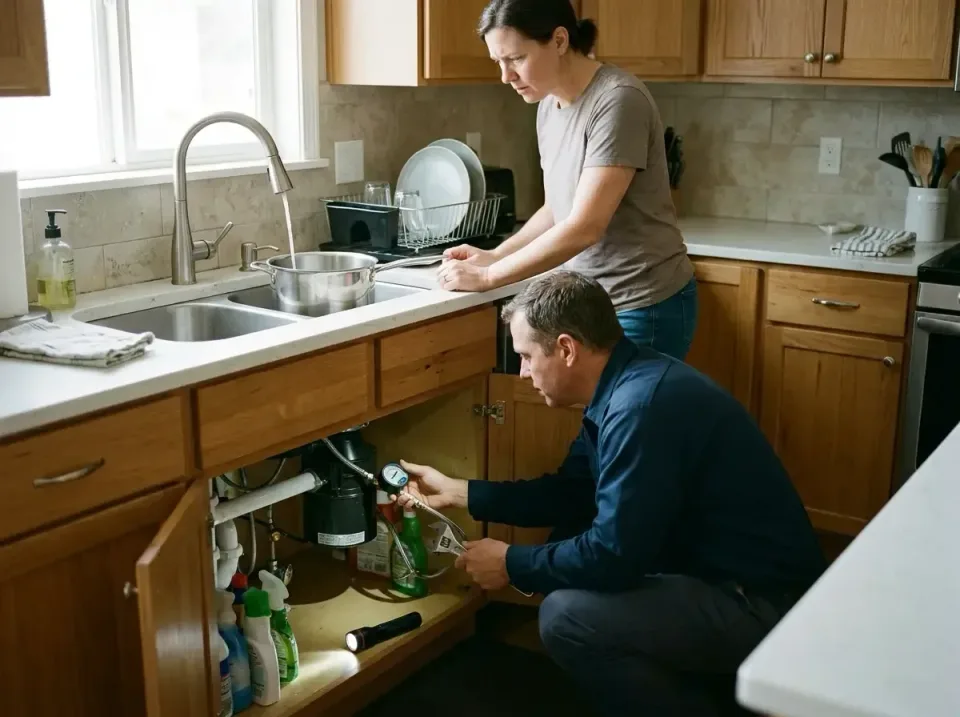
When several fixtures run poorly, a single faucet repair may not solve the problem. We take on residential diagnosis and repairs across Texas, matching the work to what inspection shows rather than treating every low-pressure call alike.
A booster pump installation can help when the verified supply conditions call for added pressure, and we check that the planned equipment and electrical access suit the property. A water pressure regulator repair addresses a regulator that is restricting or failing to control incoming pressure.
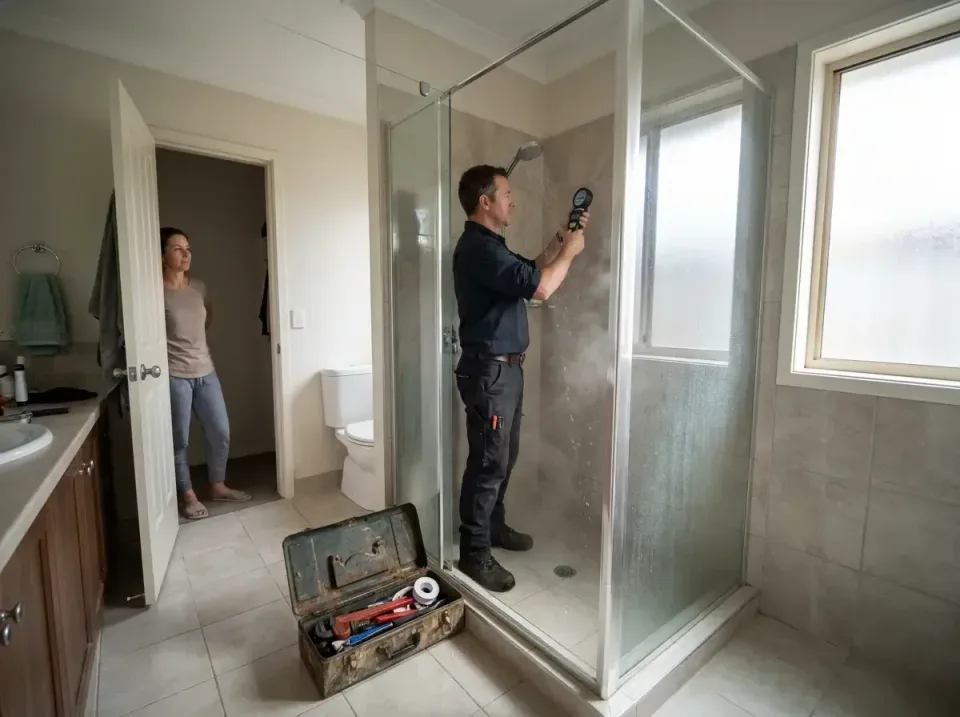
For a shower that weakens during use, we assess the fixture and nearby piping; mineral buildup on showerheads can matter in Texas homes, where hard-water deposits can restrict outlets. If hot-side flow is the isolated issue, we inspect that path before recommending repair.
We also trace a persistent multi-fixture restriction that may call for clogged water line repair. The International Plumbing Code and Uniform Plumbing Code are code systems used in plumbing; applicable requirements depend on the jurisdiction and job. See water pressure regulator repair for details.
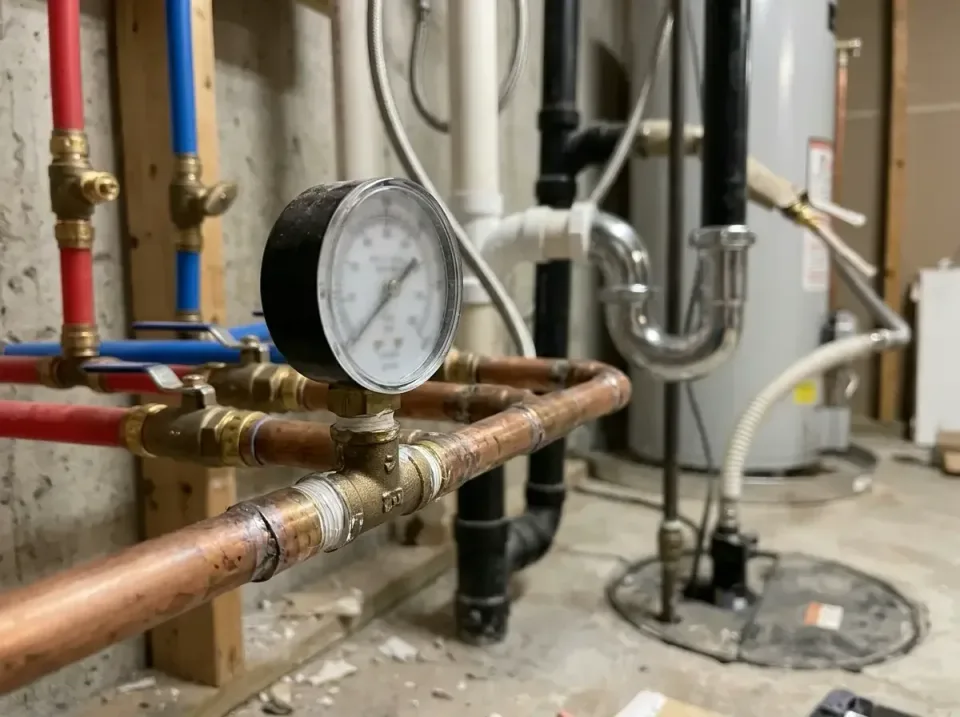
A regulator repair and a buried leak are very different jobs. We provide clear, itemized quotes so you can see the work and its drivers before authorizing it. Pressure diagnosis is typically $75–$200, depending on testing and service-call scope; regulator repair is $250–$600, with parts and accessibility affecting the total.
A booster pump installation commonly runs $800–$2,500, depending on pump capacity and electrical work. Galvanized pipe replacement may range from $1,500–$6,000 because pipe length and wall access change the labor.
Main water line leak repair often falls between $500–$3,000, with excavation and line depth shaping the scope. A pressure regulator may be ¾–1¼ inches, but nominal size alone does not determine the repair.
Texas Occupations Code Chapter 1301 addresses plumbing licensing, which helps customers understand why qualified plumbing work matters. Hill Country temperature swings and drought periods can influence outdoor work conditions and access.
Final quotes depend on repair scope, parts, access, and site conditions; call (877) 773-0781 to discuss your job.
Reach our Texas team or ask about coverage in other markets.
Straight answers for customers in Houston, TX on pricing, scheduling, and coverage.
Yes, a booster pump can help when testing confirms the supply needs additional pressure and the pump is suitable for the home.
A pressure gauge gives a measured reading that helps distinguish a system-wide pressure concern from a single-fixture restriction. We compare the result with the home’s symptoms and inspect the pressure-reducing valve rather than treating one reading as a complete diagnosis.
Yes, a pressure tank problem can contribute to fluctuating service in a private-well system, so the pump, tank, and switch need to be considered together. Tank precharge is checked only after water pressure is relieved, a step that avoids an unreliable reading.
Yes, the Safe Drinking Water Act includes lead-free plumbing requirements relevant to products used in drinking-water systems. We consider the applicable requirements when selecting replacement components and can explain why a particular part suits the repair.
Texas Plumbing Pros can review your system and provide an itemized quote before you decide.
Select a city to find local low water pressure repair providers we cover in Texas.
Recent low water pressure repair project photos.